
Description
Protective state where the unit cannot be selected by enemy basic attacks or ability targeting. Distinct from invulnerability (which blocks damage but still allows targeting); often triggered by HP-threshold trait passives or item effects.
Listed in: Buffs
Items (3)
Refine list…
-
- +20 Armor
- +10% AD
- +15% AS
- +10 AP
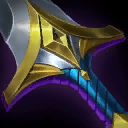
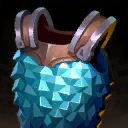
At 60% Health, briefly become untargetable, shed negative effects, and heal 20% missing health.
-
- +40 Armor
- +30% AD
- +30% AS
- +30 AP
At 60% Health, briefly become untargetable, shed negative effects, and heal all missing health.
-
- +25 Armor
- +25 MR
- +25 AP
Once per combat at 40% Health, become invulnerable and untargetable for 3 seconds. [Unique - only 1 per champion]


Traits (1)
-
Once per combat, after falling below 45% percent Health, become untargetable and repair 15% max Health per second. Upon reaching full Health, or when no other allies remain, return to combat. If fully healed, for the rest of combat Blitzcrank is in The Groove and Party Crasher's passive fires bolts four times as fast.

Frequently asked questions
-
What does Untargetable actually do in TFT?
An untargetable unit is no longer a valid target for auras, unit-targeted, auto-targeted, direction-targeted and location-targeted effects — basic attacks, abilities, items, and runes that need to pick a target simply cannot pick the unit. The unit stays on the board, can still act, and can still benefit from its own and ally buffs; it just cannot be selected as the destination of an enemy effect. Untargetable does not, by itself, reduce damage that gets through other paths (see the AoE and DoT questions below) — it is a targeting filter, not a damage filter.
Sources
- Untargetability — League of Legends Wiki ("units in a state where they are no longer valid targets for aura, unit-targeted, auto-targeted, direction-targeted and location-targeted effects") (opens in new tab)
- Tip data: Untargetable — League of Legends Wiki ("a unit that is untargetable is an invalid target; it can neither be selected nor hit by most effects") (opens in new tab)
-
What's the difference between Untargetable, Invulnerable, and Stealth?
Three different protection layers. Untargetable means enemy effects that need to pick a target cannot pick this unit — but the unit still takes damage from existing debuffs and from some splash. Invulnerable is a damage filter: "reduces all damage taken to 0," including true damage, but the unit can still be selected as a target and can still be CC'd. Stealth is a presentation/targeting hybrid — the unit is hidden, drops enemy aggro, and is treated as untargetable for the window's duration; in current TFT (since patch 12.6) the unit can attack and cast freely without breaking it, so Stealth is functionally synonymous with Untargetable plus the visual-hide and aggro-drop on top. A single buff can grant more than one at once: stasis-style effects, for example, apply Untargetable + Invulnerable in the same window.
-
Does Untargetable block AoE damage and persistent ground zones?
Mostly no. Untargetable is a targeting filter — it stops effects that need to pick this unit as a target, but persistent ground zones (burn pools, searing fields, location-effects already laid down) keep ticking on whoever is standing in them, and AoE secondary damage from an ability that hit a different primary target can still splash into an untargetable unit nearby. The protective rule of thumb: if the damage source needs to acquire your unit before it fires, untargetable blocks it; if the damage source is already on the ground or already chose a different anchor, untargetable does not save you.
Sources
- Untargetability — League of Legends Wiki (untargetable invalidates new target acquisition; pre-existing effects continue to apply) (opens in new tab)
- Tip data: Untargetable — League of Legends Wiki ("effects that have already been applied are not invalidated by the unit becoming untargetable") (opens in new tab)
-
If a unit becomes Untargetable while a damage-over-time is already on it, does the DoT keep ticking?
Yes. The wiki's rule is explicit: "Effects that have already been applied, such as buffs or debuffs, are not invalidated by untargetability," with damage-over-time called out as a notable example. A burn that landed before the untargetable window will keep ticking through the window for its full remaining duration, dealing its full true-damage payload. The same logic applies to other pre-applied debuffs — resistance shreds, healing-reduction stacks, anti-heal — they all persist. To strip a pre-applied DoT or debuff you need a cleanse, not an untargetable buff.
Sources
- Untargetability — League of Legends Wiki ("Effects that have already been applied, such as buffs or debuffs, are not invalidated by untargetability. Notable examples include damage over time") (opens in new tab)
- Burn (TFT) — League of Legends Wiki (Burn ticks true damage over its duration; refresh, not stack) (opens in new tab)
-
What happens to an in-flight projectile when its target becomes Untargetable?
Most targeted projectiles are destroyed. The wiki rule: "the act of becoming untargetable will interrupt any effects that have already acquired the unit as a target, such as target commands, and most untargetabilities will additionally destroy all incoming targeted projectiles" — the listed examples include long-range targeted ultimates, bouncing-blade-style auto-attacks, single-target slow-projectiles, and turret shots. Skill-shots that travel as ground hitboxes (a line, a cone, a circle landing on a hex rather than tracking a unit) are not target-acquired projectiles and are not destroyed by the same rule — they keep traveling and can still clip a unit standing in their path.
-
Does the enemy's attack target re-pick when their current target becomes Untargetable?
Yes. "Non-champion units (e.g. turrets, minions, monsters) will lose aggro if their target becomes untargetable," and the same applies to TFT board units — once the current target is invalid, the attacker re-acquires per the standard targeting rules (closest valid enemy in range, otherwise walk toward one). This is why a brief untargetable window on a frontliner can buy a full attack-cycle reset on the enemy carry: the carry has to drop the old target, pick a new one, then start a fresh wind-up. Plan finishers around the moment the window expires — that's when targeting locks back on.
Sources
- Untargetability — League of Legends Wiki ("Non-champion units (e.g. turrets, minions, monsters) will lose aggro if their target becomes untargetable") (opens in new tab)
- Untargetability — League of Legends Wiki ("the act of becoming untargetable will interrupt any effects that have already acquired the unit as a target, such as target commands") (opens in new tab)
-
Can a unit still be healed or buffed by allies (or itself) while Untargetable?
Yes for friendly target-acquisitions in TFT. Untargetability is described as the unit being an invalid target for effects that pick it — and TFT's untargetable buffs (item effects, trait windows, ability scripts) are applied as protective windows that explicitly let the unit keep self-healing or be repaired by trait-driven team effects. The textbook pattern is exactly that: an untargetable window paired with a heal that runs to full HP before combat resumes. The narrow caveat is the stasis-style window (Untargetable + Invulnerable + the unit's own actions paused), which is a different buff family and intentionally locks both sides out for its duration.
Sources
- Zhonya's Paradox (TFT) — League of Legends Wiki ("Once per combat at 40% Health, become invulnerable and untargetable for 3 seconds" — the stasis-style exception) (opens in new tab)
- Untargetability — League of Legends Wiki (untargetable invalidates targeting by enemy effects; previously-applied and self-applied effects continue to function) (opens in new tab)
-
Does becoming Untargetable cleanse existing crowd control, or only block new effects?
Only blocks new target-acquisitions — it does not strip what's already on the unit. Untargetable invalidates the unit as a future target; it does not retroactively remove buffs or debuffs that landed before the window started, and a stun that was already ticking will continue to tick through the untargetable window. To clear an in-progress stun you need a cleanse-class effect (one that explicitly removes existing crowd control), not an untargetable buff. Many TFT mechanics deliberately pair the two — a one-shot cleanse plus a follow-up untargetable window — precisely because untargetability alone cannot save a unit that was already locked down.
Sources
- Untargetability — League of Legends Wiki (existing buffs/debuffs and DoTs not invalidated by becoming untargetable) (opens in new tab)
- Stun (TFT) — League of Legends Wiki ("a unit that is stunned is unable to move, declare attacks, or cast their Special Ability for the duration" — duration runs independently of targetability) (opens in new tab)