
Description
Spawns a duplicate of an existing unit — typically inheriting its items.
Augments (2)
-
 Nesting Dolls+ Prismatic
 After a champion dies in combat, spawn a copy of them one star level lower with 60% health. Gain 3 free rerolls.
- Nesting Dolls++ Prismatic
After a champion dies in combat, spawn a copy of them one star level lower with 60% health. Gain 3 free rerolls.
Champions (1)
-
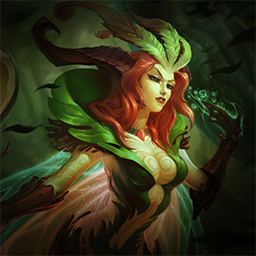
Mirror Image Passive: After player combat, your strongest LeBlanc has a 10 / 15 / 40% chance to create a copy of an ally on your board, increased by 4% per takedown. Active: Launch a mirror image at the current target, dealing 250 / 375 / 565 magic damage and 85 / 130 / 190 to adjacent enemies.


Frequently asked questions
-
What exactly is a 'clone' in TFT?
A clone is a specific type of pet — a copy of a champion that's already on your board, spawned by an ability, item, or augment. The wiki defines it as "a specific type of pet that is a copy of a champion, copying their star-level upon creation," and adds that "depending on the source, it may also copy their items." Clones are a sub-category of summons: the source champion has to already exist on the field, and only player-placeable units are cloneable — clones spawned from other clones or non-player units don't qualify as valid clone targets themselves.
Sources
- Clone tip — League of Legends Wiki ("a specific type of pet that is a copy of a champion, copying their star-level upon creation") (opens in new tab)
- Trickster's Glass (TFT) — League of Legends Wiki (artifact clone "benefits from active traits"; clone-target constraint) (opens in new tab)
- Shadow Puppet artifact — tactics.tools (renderable in-set clone source) (opens in new tab)
-
Does a clone inherit the source unit's items?
It depends on the source — there is no single rule. Some clone effects are explicit that the clone inherits its creator's items: an ability-based clone in the current set is documented as one whose "clone inherits its creator's items, stats, and current Health, and can cast" the same ability. Other clone sources are equally explicit that the clone gets none — the canonical clone-summoning artifact says "You cannot equip items to the clone." When items are inherited, they're inherited in their current state, so item effects already triggered (like a one-shot magic-immunity proc) won't re-trigger on the clone.
-
Does a clone count toward trait piece counts?
No — this is the most-reversed-by-intuition rule. A clone benefits from active traits (it gets the trait buffs already running on the team), but it does not increment any trait counter. The wiki spells this out for the canonical clone-summoning artifact: "The clone benefits from active traits." That phrasing is deliberate — "benefits from active" is not the same as "counts toward activation." The general TFT rule for pets and summons matches: they receive trait buffs but do not push you up to the next breakpoint. Practical consequence: cloning a 4-of-trait unit doesn't take you to 5.
Sources
- Trickster's Glass (TFT) — League of Legends Wiki ("The clone benefits from active traits" — phrasing distinguishes receiving buffs from counting toward activation) (opens in new tab)
- Clone tip — League of Legends Wiki (clone is "a specific type of pet" — pets receive trait buffs but don't increment trait counters) (opens in new tab)
-
What stats does the clone actually inherit?
Most TFT clone effects spawn the clone at a fraction of the source's max Health, then inherit the rest. The pattern varies by source: some clones inherit their creator's items, stats, and current Health and can keep casting the same ability; others spawn with reduced base Health and increased max Mana and explicitly cannot equip items; still others copy the holder's items outright while trading off a percentage of max Health and damage. The pattern is consistent across all of them: reduced HP pool, an item/mana adjustment, otherwise stat-equivalent to the source.
Sources
- Zed (TFT) — League of Legends Wiki ("a clone... with 33 / 40 / 40% reduced max Health and 30 increased Mana cost") (opens in new tab)
- Shadow Puppet (TFT) — League of Legends Wiki (artifact: clone copies items, 60% max Health, 40% damage) (opens in new tab)
- Shadow Puppet artifact — tactics.tools (60% max Health, 40% damage, copies items) (opens in new tab)
-
Can the clone cast its own abilities?
Yes, when the clone source explicitly grants it. The current ability-based clone in the set is documented as one that "can cast" the same ability the source casts — meaning the clone builds its own mana bar and casts independently, and a clone of a clone-spawning unit can in principle keep recursively cloning. The clone usually has a higher mana cost than the source's first cast, so chained clones cast slower than the original. Item-summoned clones (with no items) and trait/augment-summoned clones still benefit from the source's active traits, but whether they cast comes down to the specific summon source's text.
Sources
- Zed (TFT) — League of Legends Wiki ("can cast Quantum Clone" — clone has its own mana bar and casts independently) (opens in new tab)
- Trickster's Glass (TFT) — League of Legends Wiki (artifact clone's +max-Mana cost applies to its own casts) (opens in new tab)
- Zed — tactics.tools (Quantum Clone casts independently on its own mana bar) (opens in new tab)
-
If the source unit dies, does the clone die too?
No — clones are independent units once spawned. A clone has its own HP pool, takes damage on its own, and dies on its own when that pool runs out. The source dying does not auto-despawn the clone, and the clone dying does not auto-kill the source. This is why a unit with a "while a clone is alive, gain X" buff retains the buff even if the source unit goes down before any clone does — the buff tracks clone state, not source state. Conversely, an on-death trigger on the source unit does not fire when the clone dies; the trigger is bound to the source's death event, not the clone's.
-
How long does a clone last on the board?
It depends on the clone's source. Some ability-summoned clones in the current set have no documented expiration and persist until killed for the duration of the round. The artifact- and augment-summoned versions in active sets are written without an explicit duration clause, which the community reads as "persists for the round." In every case, the clone is a combat-only unit: at round end it's removed and re-spawned on the next cast/round entry — there is no mechanism for a clone to carry across rounds the way a permanent unit does.
-
How is a clone different from a regular summon?
A clone is a sub-category of summon, with one extra constraint: it has to copy an existing player unit. A regular summon spawns a fresh entity (a turret, a minion, a spirit) that has its own kit and stats independent of any board unit. A clone spawns a duplicate of a unit you already placed — same kit, often inheriting stats and sometimes items. Both are pets, both benefit from active traits, neither counts toward trait piece counts. The wiki tip is explicit about the relationship: "a clone is a specific type of pet that is a copy of a champion." If the spawn isn't tied to copying a player-placed unit, it's a summon but not a clone.
Sources
- Clone tip — League of Legends Wiki ("a specific type of pet that is a copy of a champion" — clone as sub-category of pet/summon) (opens in new tab)
- LeBlanc (TFT) — League of Legends Wiki (Fracture Reality summons N clones — clone-vs-summon constraint) (opens in new tab)
- LeBlanc — tactics.tools (Fracture Reality summons multiple clones) (opens in new tab)