
Description
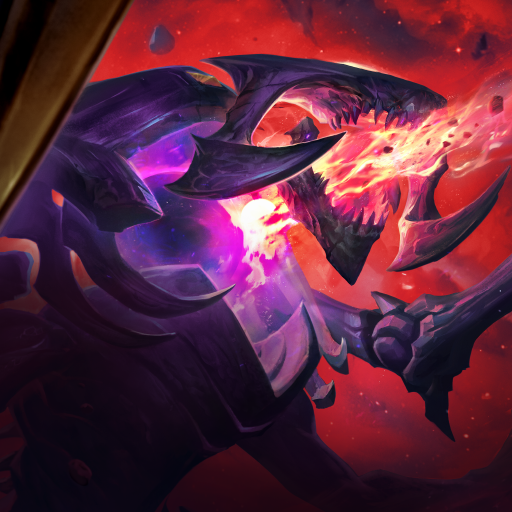
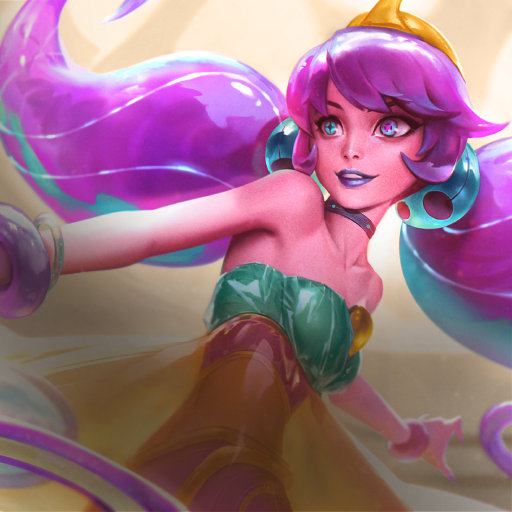
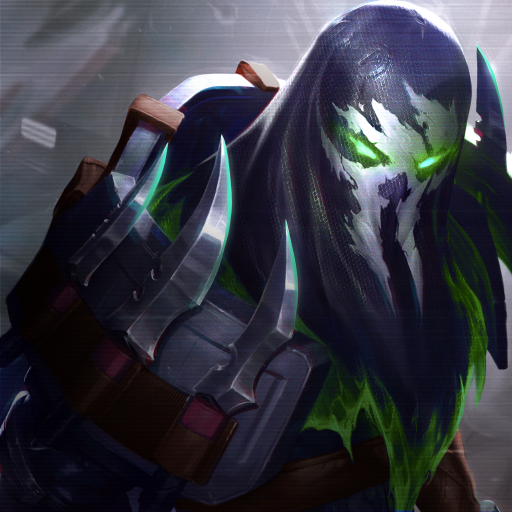
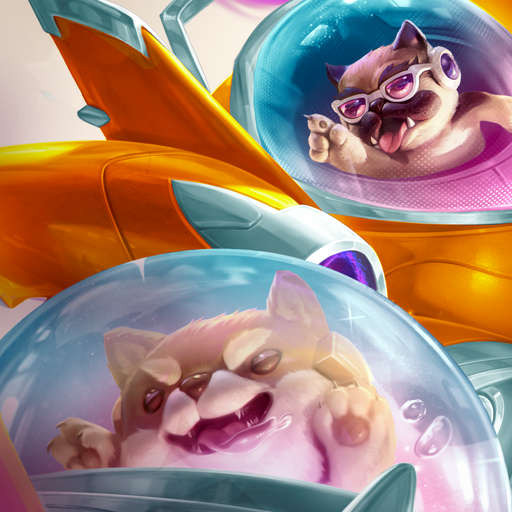
How a unit chooses what to attack or hit with an ability. By default a champion attacks the closest enemy by hex distance and keeps hitting it until it dies or moves out of range, then retargets to the next-closest enemy. That default is why frontline placement matters: a tank parked up front soaks the enemy carry's attacks while your own backline carry is left alone. Some abilities override the default with a special selector that picks a different enemy: the lowest-Health target (Gwen snips the lowest percent-Health enemy; Cho'Gath eats the lowest current-Health enemy in range), the furthest enemy (Pyke harpoons across the board), the highest-Health enemy (Blitzcrank's bolt), or the largest clump of enemies (Blitzcrank's disco ball). Untargetable and Stealth remove a unit from the pool of valid targets entirely.
What enables Targeting (6)
Champions (4)
Refine champions…
-
Accretion Deal magic damage to the lowest Health enemy in range and permanently gain 12 / 18 / 33 maximum Health. If this kills them, permanently gain 30 / 40 / 70 maximum Health instead.
-
Dance n' Dice Passive: Attacks deal magic damage. Gwen is in The Groove while targeting an enemy below 40% Health. Active: Dash to a nearby hex to snip the lowest percent Health enemy, dealing 145 / 220 / 410 magic damage to the target and 75 / 110 / 215 magic damage to enemies in a cone. If this kills, dash and snip again at 65% damage!
-
Marked for Death Reposition up to one hex to throw a harpoon at the furthest enemy. The harpoon pulls the first enemy hit one hex forward and deals physical damage. Then, teleport behind them and cleave, dealing 210 / 315 / 720 physical damage to them and physical damage to nearby enemies. -
Party Crasher Passive: Every 2 / 2 / 0.5 seconds, call down a bolt on the highest Health nearby enemy that deals 60 / 90 / 150 magic damage. Active: Summon a disco ball at the largest clump of enemies, then knock up the current target into it, dealing 150 / 225 / 999 magic damage. They crash down into the disco ball, dealing 175 / 265 / 5000 magic damage in a three hex radius. Enter The Groove for 1 second per enemy hit.








Traits (1)
-
Stargazers chart a different constellation every game. This game: The Huntress.

Combat Start: Mark the highest Health enemies.

Allies in empowered hexes gain 15% Attack Speed. Stargazers in empowered hexes gain more and heal for 15% of their max Health when a marked enemy dies.

More hexes reveal at each player level

Anima items (1)
-
- +15 AP
Every 3 seconds, fire a bolt at a random enemy in Attack Range, dealing ? magic damage. Aurora Bonus: If this item is equipped on Aurora, she gains 12 Ability Power when the bolt hits. Damage increases based on Stage.
Frequently asked questions
-
Do all my units attack the same enemy?
Usually not. Every unit picks its target independently, and the default rule is "closest enemy by hex distance" — so each of your units measures the board from its own hex and locks onto whichever enemy is nearest to it. Because your units stand on different hexes, they routinely fan out across several different enemies rather than all funneling onto one. A unit keeps hitting the target it picked until that target dies or moves out of range; only then does it re-acquire the next-closest enemy. If you actually want focus-fire, you have to engineer it through positioning (clumping units so they share a nearest enemy) — it is not the automatic behaviour.
Sources
- Champion (TFT) — League of Legends Wiki ("if the target moves out of range, the attacker only chases their target for 1 hex before switching to the closest enemy") (opens in new tab)
- TFT Positioning Guide — Mobalytics (units prioritise the closest enemy; clump units to focus the same target) (opens in new tab)
-
Can I choose which enemy my carry attacks?
There is no direct "attack that unit" command in TFT — you never click an enemy to assign a target. The only lever you have is positioning. Because units default to the closest enemy, where you place a unit on your side of the board decides which enemy ends up nearest to it, and therefore which enemy it attacks first. Move the same carry one hex and it can flip onto a completely different opener. So "controlling targeting" in TFT always means "controlling distances," not issuing a target order.
-
How do I make my carry hit the enemy backline or a specific enemy?
You shape it with front-to-back positioning, not a target button. Since both boards target by proximity, your frontline tanks should sit in the front rows so they are the closest enemies the opponent acquires first — that pins enemy aggro on your durable units and buys your backline carry time. To push a carry onto a specific enemy, you move it (or place a decoy/bait unit) so the enemy you want is the closest one to that carry. The whole "closest-enemy" rule applies to the enemy board too, which is exactly why repositioning your frontline changes who the enemy focuses.
-
Does my unit's ability hit the same enemy it's auto-attacking?
Not necessarily — ability targeting and auto-attack targeting are independent systems. A basic attack defaults to the closest enemy, but many abilities run their own selector: lowest-percent-Health in range, the furthest unit, the largest clump, highest current Health, and so on. So an ability can fire at a completely different enemy than the one the unit is auto-attacking, depending on how that specific ability is scripted. The common assumption "my carry's ability lands on whatever it is auto-attacking" is therefore often false; check the ability's own targeting before you position around it.
Sources
- Champion (TFT) — League of Legends Wiki ("Some abilities have their own targeting (such as targeting the further unit) that is separate or more specialized (such as lowest health in range)") (opens in new tab)
- TFT Positioning Guide — Mobalytics (some units have special targeting mechanics beyond proximity, so positioning holes can be exploited) (opens in new tab)
-
Does untargetable mean a unit can't be hit at all?
No. Untargetable (and stealth, which is treated as untargetable) is a targeting filter, not a damage shield — it removes the unit from the single-target pool, so attackers and target-acquiring abilities can no longer pick it and must re-acquire the next valid enemy. But effects that do not need to newly acquire the unit still land: area / zone damage on the ground keeps ticking on whoever stands in it, splash from an ability anchored on a different unit can still clip it, and any debuff already applied keeps running. "Untargetable" buys a retarget window on the enemy, it does not make a unit immune to everything.
Sources
- Champion (TFT) — League of Legends Wiki (attacker switches to the closest valid enemy once its target leaves the single-target pool) (opens in new tab)
- Untargetability — League of Legends Wiki ("no longer valid targets for ... unit-targeted, auto-targeted ... effects"; "Effects that have already been applied ... are not invalidated") (opens in new tab)
- TFT Positioning Guide — Mobalytics (decoy / bait units pull targeted abilities, so a unit removed from targeting forces a re-pick) (opens in new tab)