
Description
Repositioning movement that breaks normal movement — either a telegraphed dash across hexes or an instant blink/teleport to a new position. In Set 17, the Challenger trait dashes its champions to a new target when their current one dies, and several abilities blink or teleport behind enemies for setup or escape.
Listed in: Buffs
Items (5)
-
- +10% AD
- +40% AS
- +10 AP
- +15% Omnivamp
When switching targets, blink to the next target. Attacks and Abilities execute the holder's target below 12% of their Health. Kills grant the holder 50% Attack Speed decaying over 3 seconds.
-
- +300 HP
- +35% AD
- +45% Crit
After killing a target, shed negative effects and dash to the farthest target within 4 hexes. The next 2 critical attacks deal 50% bonus Critical Strike Damage.
-
- +300 HP
- +40% AD
- +20% Crit
Combat start: Teleport the holder to the mirrored hex on the enemy's side of the board. After 8 seconds, the holder returns to their original location.
-
On takedown, dash to the next target and attack 40% faster for 2 attacks.
-
On takedown, dash to the next target and attack 40% faster for 3 attacks.


Augments (2)
-
 The Big Bang Gold
 Gain a Meepsie. Your strongest Meepsie becomes a Magic Fighter that leaps to a nearby hex to deal damage in a large radius.
-
 Shieldmaiden Silver
 Gain a Leona. Your strongest Leona becomes an Attack Fighter that dashes through enemies to deal physical damage, stunning the first target hit.
Champions (6)
Refine list…
-
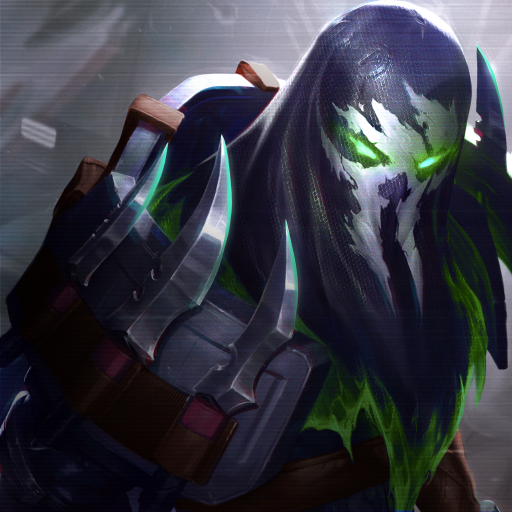
Diviner's Judgment Stab the target, causing them to bleed for 460 / 690 / 1135 physical damage over 18 seconds. After the attack, leap to the highest percent Health enemy within 3 hexes. -
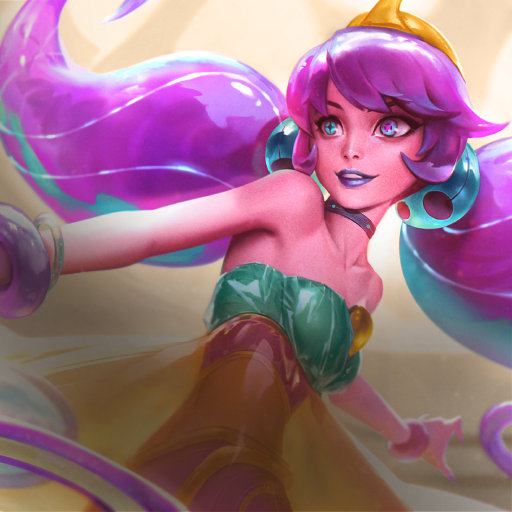
Dance n' Dice Passive: Attacks deal magic damage. Gwen is in The Groove while targeting an enemy below 40% Health. Active: Dash to a nearby hex to snip the lowest percent Health enemy, dealing 145 / 220 / 410 magic damage to the target and 75 / 110 / 215 magic damage to enemies in a cone. If this kills, dash and snip again at 65% damage!
-
Marked for Death Reposition up to one hex to throw a harpoon at the furthest enemy. The harpoon pulls the first enemy hit one hex forward and deals physical damage. Then, teleport behind them and cleave, dealing 210 / 315 / 720 physical damage to them and physical damage to nearby enemies. -
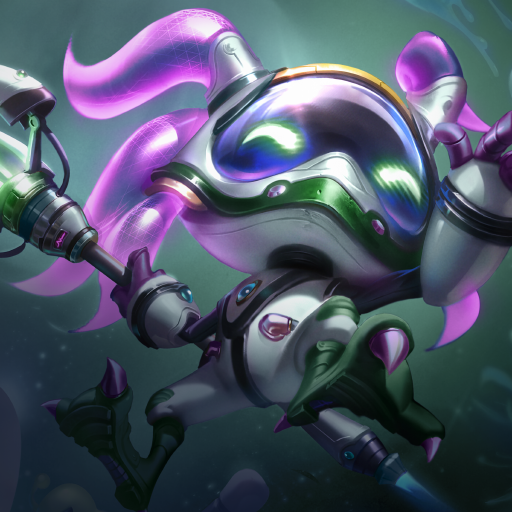
Meep Bait Dash through the current target, dealing magic damage. Every third cast also summons a Mega Meep after a delay, briefly knocking the target up and dealing magic damage. Adjacent enemies take 50% damage. Meep Bonus: Add ? Meep to the bait, increasing Mega Meep damage by . -
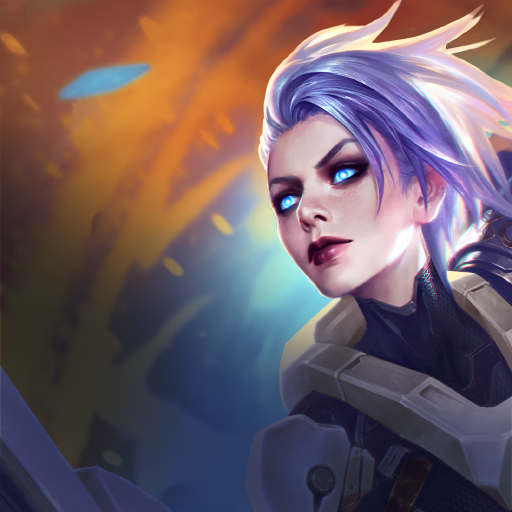
Time Warp Passive: This Ability adapts to Attack Damage or Ability Power, whichever is higher. Attacks deal physical damage. Active: Dash to a nearby hex, gaining 100 / 150 / 1200 Shield for 2 seconds and slashing adjacent enemies for physical damage. Every third cast, leap into the air and launch a wave of energy that deals physical damage to enemies in a line.
-
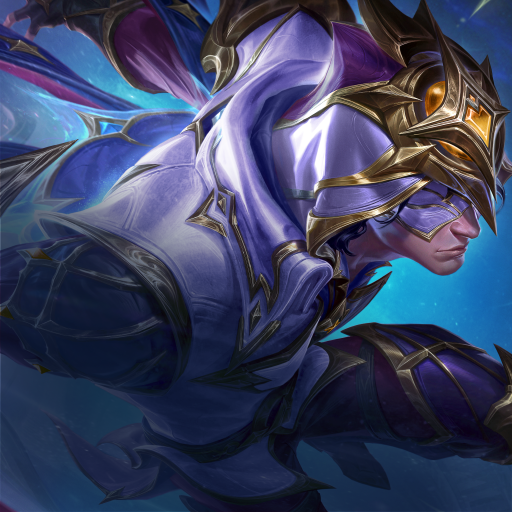
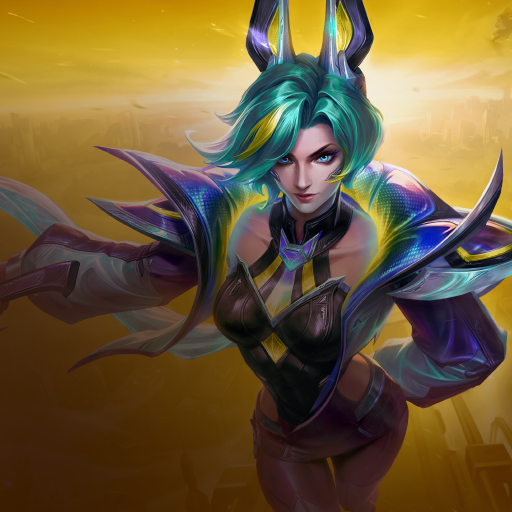
Perfect Bladework Passive: Every 2 attacks, reveal a Vital on the target. If a Vital exists, dash to attack it dealing 37 / 56 bonus true damage and heal for 15% of the damage dealt. Active: Reveal 6 Vitals on the target and quickly attack them all. If the target dies, remaining Vitals transfer to the nearest enemy. Upon striking the final Vital, create a two hex aura that heals allies within for over 5 seconds.









Traits (1)
-
Your team gains 10% Attack Speed. Challengers gain bonus Attack Speed. When their target dies, Challengers dash to a new target and increase their Attack Speed bonus by 50% for 2.5 seconds.

Frequently asked questions
-
What is a dash in TFT?
A dash is a self-movement ability that carries a unit across hexes to a new position — typically as part of a champion's Special Ability or trait innate. The unit physically traverses the intervening space (unlike a blink, which is an instant location swap). Common patterns include dashing to the farthest enemy, dashing to the lowest-Health target within a few hexes, or dashing to a new target after the current one dies. Dashes ignore unit collision but resolve onto a valid hex.
-
Is a dash the same as a blink, leap, or teleport?
Mechanically no — but TFT often uses the terms interchangeably in ability text. A dash traverses the space between start and end and can in principle be affected by things along the way; a blink is instantaneous point-to-point movement that bypasses terrain. A 'leap' is visually a jump but is treated as a dash by the game engine — units are considered on the ground for targeting purposes regardless of the animation's apparent height. 'Teleport' in TFT ability text is usually shorthand for a blink.
-
Does crowd control stop a dash already in progress?
In base League, only Airborne (knock-ups), Knockdown, and Stasis interrupt an active dash — Stun and Root prevent a dash from being started but do not cancel one that is already moving. TFT's CC roster differs: Stun, Airborne, and Stasis are the standard pieces; Stasis additionally makes the target invulnerable and untargetable for its duration. Practically, if a dasher is already mid-flight, only knock-up-style or stasis effects reliably stop them; pre-emptive Stun is what keeps them on the ground.
-
Does a dash make the unit untargetable while moving?
Not by default. Dash and untargetable are separate properties — a unit only becomes untargetable mid-dash if the specific ability says so. Some gap-closing abilities do bake untargetability into the dash window, but plenty of dashes leave the unit fully targetable while travelling. Always read the ability text rather than assuming.
-
Why does my backline carry get bursted instantly — what's the dash-to-backline pattern?
Backline carries get deleted when an enemy repositions onto them: a unit with a gap-closing Special Ability dashes or leaps over your front line and lands next to the squishiest target. In the current set there is no trait that grants a whole class an automatic round-start backline leap — the pressure comes from individual champions' dash abilities, plus the Challenger trait, whose units dash to a new target whenever their current target dies (and gain a burst of Attack Speed), chaining that pressure deeper into your formation as the fight goes on. Counter with positioning, frontline crowd control, or items that reset the dasher's position.
-
How do I counter dash-to-backline pressure with positioning?
Two reliable shapes: bait corners or cluster the carry. Putting tanky decoys in the corners pulls dashers to the edges so your carry gets free attack-windows; clustering allies around the carry instead means the dasher lands next to multiple targets and gets focused down before the burst lands. Frontline knock-up or stasis-on-arrival items also work — anything that makes the dasher's first action interruptable. Because dashers usually pick the farthest enemy, deliberately changing who is 'farthest' is the main lever you control.
-
How is dash different from pull?
Direction and agency. Dash is self-movement — the dasher chooses to move toward a target. Pull is a forced yank — an enemy effect drags a unit toward the source against its will. The pulled unit doesn't get a say; the dasher does. Both end with the two units close together, but only pull is classified as crowd control, while dash is a movement ability of the casting unit.