
Description
Forces affected enemies to attack the unit that applied it, overriding their normal target selection for a duration. It is a targeting override rather than a disable — a taunted enemy keeps attacking and casting, it simply cannot choose whom to hit. Frontline units use it to hold enemy damage on themselves instead of letting it through to the backline.
What enables Taunt (3)
Champions (3)
Refine champions…
-
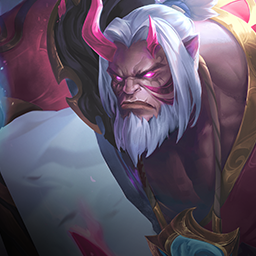
Last Rites Passive: On death, spawn a Spirit Walker with 330 / 634 / 1171 max Health which immediately taunts, forcing enemies to attack it. Active: Restore 280 / 325 / 435 Health and strike the target, dealing 150 / 225 / 340 physical damage.
-
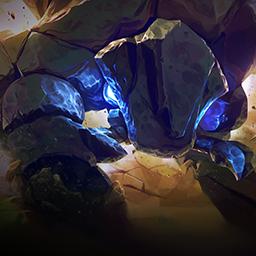
Rock and Roll Passive: On death, split into two Kruglettes with 182 / 338 / 608 Health which immediately taunt, forcing enemies to attack them. Active: Gain 175 / 225 / 325 max Health, then roll into the target, dealing 223 / 358 / 620 damage. Slate Buff: On death, Krug and Kruglettes Shield allies for 8% max Health.
-
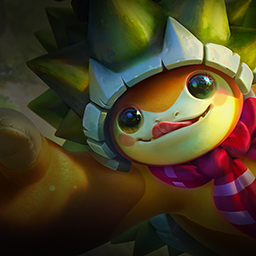
Defensive Ball Curl Taunt, forcing enemies to attack this champion. For 4 seconds, gain 350 / 450 / 550 Shield and 60 Armor and Magic Resist. When the Shield breaks, deal 50 / 75 / 120 physical damage to enemies in 2 Hexes.






See also
What counters Taunt
What Taunt counters
Frequently asked questions
-
What does a taunt actually do in TFT — is it a stun?
No. A taunt only changes who an enemy attacks — its target becomes the unit that applied the taunt, for a duration. A stun is the opposite: no moving, no attacking, no casting. Taunt is listed as a separate effect that forces the target to attack the source, so a taunted unit keeps attacking and keeps casting, and mana — gained by attacking and being attacked — keeps building. League's taunt also blocks casting; this game's does not.
-
Does a taunt drag every enemy on the board onto the taunter?
No source says taunt is board-wide, and none states a hex radius either. The keyword sets no reach of its own: it says an affected enemy changes its target to the unit that applied it. How many enemies are affected comes from the effect doing the taunting, not from the keyword, and this set's taunt wording names no radius. Read the reach off the tooltip, and place a taunter where enemy damage already is. See targeting.
-
Does a taunt redirect enemy abilities too, or only their basic attacks?
Attacks. The keyword forces affected enemies to attack the source — it changes their attack target. Abilities are a separate layer: some carry their own targeting, such as the furthest unit or the lowest-Health enemy in range, which is separate from attack range, and no source says a taunt overrides those selectors. An ability that hits whatever the unit is currently attacking does follow, because the taunt moved that target. So taunt soaks attacks; it is not spell protection. See targeting.
-
Does CC immunity block a taunt?
Taunt sits on the crowd-control list, and crowd-control immunity prevents any type of crowd control from being applied — so a unit that is immune when the taunt arrives keeps choosing its own target. Immunity only blocks application: crowd control already on a unit still has its effect, so switching immunity on afterwards will not shake a live taunt off, and a taunt that lands once the window has ended applies normally. See stun.
-
If a unit is taunted twice, do the taunts stack?
Not as added-up duration, as far as anything documented goes. A taunted unit's target is set to the unit that applied the taunt, so it holds one forced target at a time: a second taunt re-points it at the newer source rather than giving it two. Whether the timer refreshes, extends, or is simply replaced is not stated in any current source, so do not count on overlapping taunts lasting longer — firing them one after another is the safer plan.
-
What happens if the taunter dies or goes untargetable mid-taunt?
If the taunter dies, the forced target is gone, so the enemies it held take a new one — the documented fallback when a unit loses its target is the closest enemy, which is often the unit you were protecting. Untargetability is a different case: effects already applied are not cancelled by a unit becoming untargetable unless specially coded, so do not assume it ends a running taunt. Plan for the snap-back either way.
-
Is taunting ever a trap?
Yes. It concentrates enemy attacks onto one unit, since affected enemies are forced to attack the source instead of picking their own target. When that unit dies, they fall back to the default — the closest enemy — and if the rest of your frontline is already gone, that is your backline, hit immediately. So a taunt pays off only on a holder that survives the attention it buys: real durability or a shield behind it.
-
Is "taunt" the combat effect the same as a taunt emote?
They are unrelated, and only share a word. The keyword on this page is a combat effect: affected enemies are forced to attack the unit that applied it. Emotes are cosmetic images used in this game and in League, shown for champions and for the little creature you play as; they do nothing in a fight. No taunt emote command or key binding is documented for this game's client, so if you came for animations, this is the wrong page.