
Description
Generic enhancement — temporarily boosts an attack, ability, or stat beyond its baseline. Empower effects are usually one-shot bonuses tied to a single attack or cast (e.g., Caitlyn's Headshot passive empowers every third attack; Xayah's cast replaces her next five attacks with empowered feathers), not permanent stat gains.
Champions (7)
-
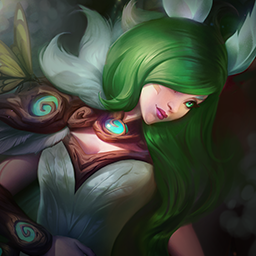
Dance of Life Restore 314 / 403 / 619 Health over 2 seconds. The next attack is replaced with a bash that deals 140 / 231 / 377 magic damage.
-
Deadly Plumage Gain 50% Attack Speed for the next 5 attacks. These attacks are replaced with feathers that deal 68 / 102 / 155 physical damage and reduce Armor by 2 .
-
Headshot Passive: Every third attack is replaced with a Headshot that deals 210 / 315 / 515 physical damage. -
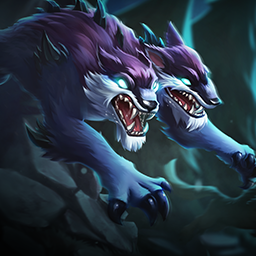
Rending Claws Leap to the lowest Health enemy within 3 Hexes and deal 500 / 1050 / 2250 physical damage. The next 2 attacks gain 175% Attack Speed and deal 60 / 90 / 135 bonus physical damage. Grey Buff: Gain Precision and 25% Critical Strike Chance, increased up to 75% based on missing Health.
-
Ki Barrier Grant 325 / 400 / 500 Shield to Shen and 200 / 275 / 375 Shield to a nearby damaged ally for 4 seconds. Both of their next 3 attacks gain 40% Attack Speed and deal 35 / 55 / 80 bonus magic damage.
-
Arise! Gain 150% Attack Speed and summon 2 soldiers for the next 6 attacks. These attacks are replaced by commands which direct each soldier to deal 40 / 60 / 96 magic damage per attack. -
Javelin Toss Adaptor : Gain 150% Attack Speed for the next 3 attacks. These attacks are replaced with javelins that deal 170 / 255 / 2000 magic damage. The 3rd attack instead targets the furthest enemy with the least items and deals 285 / 425 / 3000 magic damage. Adaptor : Transform into a Melee cougar Assassin that swipes enemies.














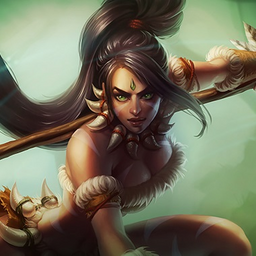


Traits (2)

Frequently asked questions
-
Is "empower" a defined keyword in TFT, or just a regular word?
It's a generic enhancement verb in tooltip text, not a defined keyword like Burn or Stun. The community glossaries don't list it as a separate stat or status, and no TFT-namespaced wiki page exists for an "Empower" mechanic. When an ability or trait says a unit "launches empowered strikes" or "fires an empowered" version of an attack, the empower part is descriptive — the actual rules live in the surrounding numbers (chance, damage, scaling). Treat the word as a flag that the effect is a stronger one-shot variant of something the unit already does, then read the specific tooltip for the contract.
-
Is an empowered attack a one-shot bonus or a persistent buff?
Almost always one-shot. The pattern in TFT tooltips is "the next attack..." or "X empowered strikes..." — the empower is consumed when the qualifying hit lands and goes away. It's not a duration buff like attack speed or damage amp that ticks for N seconds across many attacks. Read the count in the tooltip: if it says "3 empowered strikes," you get exactly three; if it's a percent chance per attack to fire an empowered version, each successful proc is its own one-shot. Persistent stat buffs use words like "gains," "for the rest of combat," or a duration; empower text doesn't.
Sources
- Caitlyn (TFT) — League of Legends Wiki (passive: "Attacks have a 15% chance to fire an empowered Headshot, dealing ... physical damage" — per-attack one-shot) (opens in new tab)
- Vex (TFT) — League of Legends Wiki (active: "Shadow launches 3 empowered strikes, dealing ... magic damage instead" — finite per-cast count) (opens in new tab)
-
Does a "% chance to fire an empowered attack" roll once per attack or once per combat?
Once per attack. The standard TFT shape is a per-attack independent roll: each basic attack rolls the printed chance, and a success replaces (or augments) that single attack with the empowered version. A current trait makes this explicit by adding a "check twice and take the better outcome" rule on top of chance-based ability procs — that only makes sense if each attack carries its own roll. Over many attacks the empower fires roughly at the printed rate; short fights can streak high or low because each roll is independent.
-
When an active ability fires "N empowered strikes... instead," do the normal passive strikes still happen?
No — the word "instead" in the tooltip is load-bearing. When the active resolves, it substitutes the empowered version for the normal output during that cast: e.g. an ability that says "launches 3 empowered strikes, dealing X% AP as magic damage instead" replaces the regular passive-strike payload for that cast, it doesn't add the empowered strikes on top of the normal pulse. After the cast resolves, the unit's regular passive resumes for the next attacks. So the empower is a swap during the cast window, not a stacking add-on.
-
Can two empower sources stack on the same unit?
Two distinct sources (e.g. a passive empower-on-attack plus a separate trait or augment that empowers the next cast) generally fire independently because they listen for different triggers. What does NOT stack cleanly is two copies of the same empower source on one unit — TFT treats those as duplicates and usually only counts one. If you're combining a per-attack empower with a per-cast empower, expect them to coexist; if you're trying to double up the exact same buff, expect a single trigger. When in doubt, the patch notes are the source of truth — Riot has historically added explicit guards when stacked-empower interactions broke balance.
-
Does an active ability's empowered strike count as a "cast" for on-cast items?
The cast itself is what triggers on-cast items, not the empowered strikes the cast produces. A spellblade-style item that says "the holder's first attack after each Ability cast deals ... bonus magic damage" fires its on-cast hook once when the ability resolves; the empowered strikes inside the ability are part of the ability's payload, not separate casts. Mana-refund and shield-on-cast items work the same way: one cast event, one on-cast trigger, regardless of how many empowered hits the ability spawns.
-
Do empowered hits from a multi-cast trait still fire at full strength?
No — when a set ships a multi-cast trait, the bonus occurrence typically runs at reduced effectiveness rather than full strength. A common pattern: the trait makes a unit's ability occur an extra time at a reduced percentage of its normal strength. That reduction applies to the ability's damage numbers, including the empowered-strike damage the ability is built around. So a unit whose active fires N empowered strikes will still fire N strikes on the bonus occurrence, but each strike's damage is scaled down by the trait's strength percentage. Whether per-strike on-hit/on-cast hooks all re-fire at full versus reduced rate is patch-volatile — read the current notes if it matters for the line.
-
What's the difference between "empower" and "damage amp"?
Damage amp is a stat that multiplies all post-mitigation damage from a unit for as long as the buff is up — it scales every attack and ability hit while active. Empower is a tooltip flag for a stronger one-shot variant of a specific instance: this attack, this cast, these N strikes. Damage amp is broad and durative; empower is narrow and consumed. They stack cleanly on the same unit when both apply: an empowered hit landed during a damage-amp window benefits from the amp multiplier on top of its already-bigger empowered base. The mechanic-page edges section here lists which entities pair the two.